
Science Gears Pty Ltd
Electrochemistry Accessories · 🇦🇺 AU
View supplier storefront →
Verified
5+Yrs
0Orders
NewRating
1 / 2
Click to zoom
Science Gears Pty Ltd · Electrochemistry Accessories
Solid State Battery Test Cell
0.0(0 reviews)·✓ 0+ verified orders
WHOLESALE UNIT PRICE
—
Bulk pricing available
Quantity
1
🔒Escrow Protected
🏭Factory Verified
🚢Ships Globally
🇦🇺
Ships from
Queensland, Australia
⏱️
Lead time
3–7 days (AUS) · 7–21 days (INT)
💳
Payment
T/T · PayPal · Escrow · L/C
📜
Certifications
—
🌐
Export to
200+ countries · All major markets
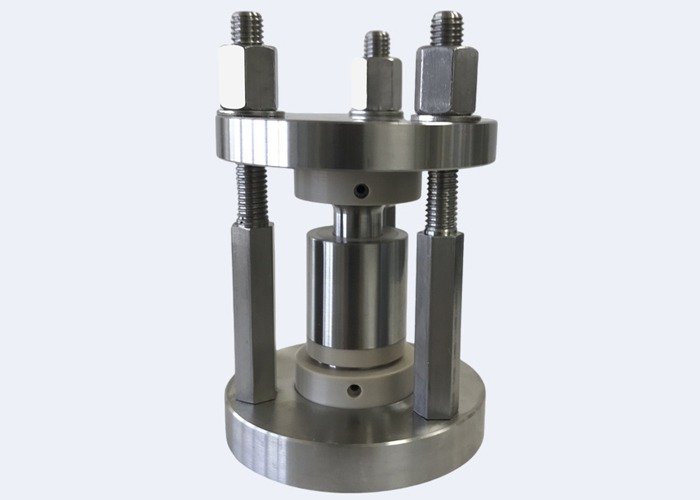
Principle of Operation The Solid State Battery Test Cell is designed for precise evaluation of solid-state electrolytes (SSEs) and solid-electrode interfaces under controlled mechanical pressure. It enables researchers to assemble, compress, and test all-solid-state battery stacks without liquid electrolytes, making it ideal for lithium, sodium, and sulphide-based solid-state systems. The core working principle involves applying axial mechanical pressure to ensure intimate contact between the solid electrolyte and electrode layers, improving ionic conduction and minimising interfacial resistance. During operation, the cell allows real-time electrochemical measurement when connected to a potentiostat or battery cycler, making it essential for studying interfacial kinetics, ionic transport, and electrochemical stability of novel materials. Key Features & Specifications High-Precision Construction: Made from corrosion-resistant stainless steel for mechanical strength and inertness against reactive battery materials. Insulating Components: PEEK or PTFE parts provide excellent chemical and electrical insulation. Compression Mechanism: Integrated screw-and-nut assembly allows fine-tuned pressure control for optimising contact between solid layers. Sealing System: Dual O-ring configuration prevents electrolyte leakage and contamination. Electrode Chamber: Supports layered configurations with diameters up to φ16 mm. Ease of Assembly: Modular, reusable design for efficient sample loading and cleaning inside glovebox environments. Optional Accessories: Compatible with heating stages or pressure sensors for advanced solid-state experiments. Compatibility The test cell interfaces with a wide range of potentiostats, galvanostats, and battery cyclers, enabling: Galvanostatic charge–discharge testing Electrochemical impedance spectroscopy (EIS) for ion conductivity measurement DC polarisation and interfacial resistance analysis It is fully compatible with glovebox assembly for handling air-sensitive sulphide or oxide electrolytes, and can be coupled with in-situ Raman or XRD modules for structural monitoring under applied bias. Typical Applications Development of solid-state electrolytes (sulphide, oxide, polymer). Study of electrode–electrolyte interface resistance and stability. High-pressure solid-state cell assembly for performance optimisation. Ionic conductivity and interfacial kinetics testing. All-solid-state lithium, sodium, and multivalent battery research.
Technical specifications
| Model / SKU | SCIGEAR00087 |