
Science Gears Pty Ltd
Electrochemistry Accessories · 🇦🇺 AU
View supplier storefront →
Verified
5+Yrs
0Orders
NewRating
Click to zoom
Science Gears Pty Ltd · Electrochemistry Accessories
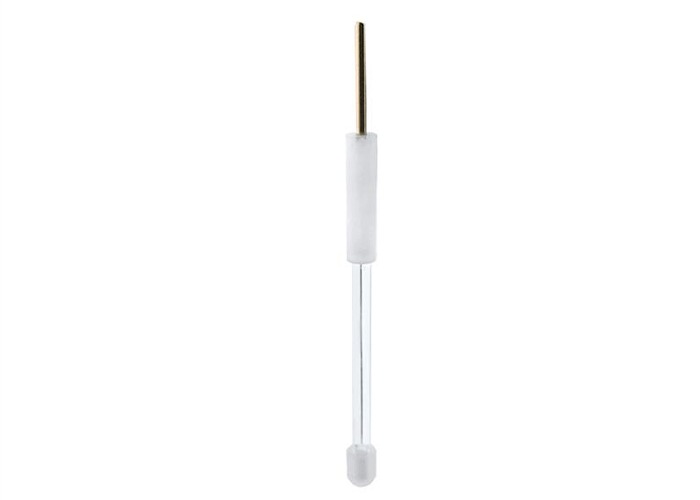
Non-aqueous Ag/Ag+ Reference Electrode
0.0(0 reviews)·✓ 0+ verified orders
WHOLESALE UNIT PRICE
—
Bulk pricing available
Quantity
1
🔒Escrow Protected
🏭Factory Verified
🚢Ships Globally
🇦🇺
Ships from
Queensland, Australia
⏱️
Lead time
3–7 days (AUS) · 7–21 days (INT)
💳
Payment
T/T · PayPal · Escrow · L/C
📜
Certifications
—
🌐
Export to
200+ countries · All major markets
The Non-Aqueous Ag/Ag⁺ Reference Electrode (often referred to as an Ag/AgNO₃ reference electrode ) is designed for non-aqueous electrochemistry , where conventional aqueous reference electrodes (such as Ag/AgCl and SCE ) are often unsuitable due to solvent incompatibility, moisture sensitivity, and unstable liquid junction potentials. It supports more reproducible potential control for organic electrochemistry , including cyclic voltammetry (CV), pulse methods, electrocatalysis screening, and molecular redox studies in non-aqueous media. In a typical non-aqueous Ag/Ag⁺ reference system, a silver element is equilibrated with Ag⁺ ions supplied by silver nitrate (AgNO₃) dissolved in a compatible organic solvent (commonly acetonitrile-based systems in published practice). For improved stability and conductivity, the filling solution is commonly prepared with a supporting electrolyte (for example, tetrabutylammonium salts such as TBAPF₆ ), selected to suit the electrolyte system used in your cell. Why both AgNO₃ and a supporting electrolyte are used A reference electrode must contain a well-defined redox couple to set a stable potential. AgNO₃ supplies Ag⁺ , enabling the defining equilibrium Ag ⇌ Ag⁺ + e⁻ , which sets the reference potential. A supporting electrolyte (for example, TBAPF₆) does not define the reference potential on its own, but it is important because it improves ionic conductivity and helps maintain a more stable liquid junction potential at the frit. In practice, using AgNO₃ + supporting electrolyte together helps reduce noise and drift and improves repeatability in non-aqueous measurements. Typical filling solution guidance (common laboratory practice) AgNO₃ concentration: 0.01–0.1 mol/L Supporting electrolyte (example: TBAPF₆): often prepared at ~0.1 mol/L , consistent with the experimental electrolyte system where suitable Reporting best practice: use an internal standard such as ferrocene/ferrocenium (Fc/Fc⁺) for inter-laboratory comparability Typical applications Non-aqueous cyclic voltammetry (CV) in organic solvents Molecular electrochemistry and redox potential studies Electrocatalysis screening in moisture-sensitive electrolytes Organic electrosynthesis and mechanistic electrochemistry Spectroelectrochemistry where aqueous references are unsuitable Related technical guide (internal link) For a practical selection guide and reporting recommendations, see: How to Choose the Right Reference Electrodes https://www.sciencegears.com.au/blogs/how-to-choose-the-right-reference-electrodes Note: Always confirm solvent and electrolyte compatibility for your specific experimental conditions.
Technical specifications
| Model / SKU | SCIGEAR00047 |