
Science Gears Pty Ltd
Electrochemistry Accessories · 🇦🇺 AU
View supplier storefront →
Verified
5+Yrs
0Orders
NewRating
Click to zoom
Science Gears Pty Ltd · Electrochemistry Accessories
Glassy Carbon Plates & Sheets
0.0(0 reviews)·✓ 0+ verified orders
WHOLESALE UNIT PRICE
—
Bulk pricing available
Quantity
1
🔒Escrow Protected
🏭Factory Verified
🚢Ships Globally
🇦🇺
Ships from
Queensland, Australia
⏱️
Lead time
3–7 days (AUS) · 7–21 days (INT)
💳
Payment
T/T · PayPal · Escrow · L/C
📜
Certifications
—
🌐
Export to
200+ countries · All major markets
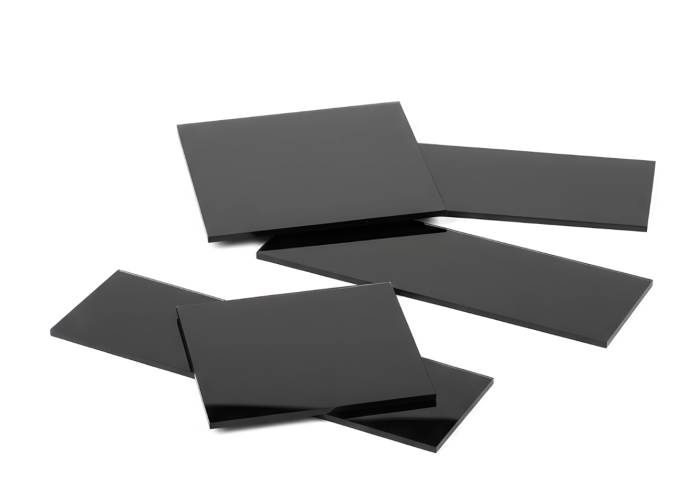
Glassy carbon plates and sheets are widely used as inert working electrodes when you need a chemically resistant, low-background substrate with a smooth, polishable surface. They are ideal for clamp-style electrode holders where a defined flat area is exposed to electrolyte for controlled, repeatable measurements. Why glassy carbon Glassy carbon combines the practicality of carbon electrodes with improved chemical stability and surface finish compared with many porous graphites. It is commonly selected for experiments requiring reliable baselines, reproducible surface preparation, and compatibility with a broad range of aqueous electrolytes. Key features Chemically resistant carbon electrode material suitable for many acidic, neutral, and alkaline electrolytes Polishable surface for repeatable electrochemical response (mirror finish preparation possible) Flat plate/sheet formats compatible with plate clamps and electrode holders Defined geometric area exposure for quantitative current density calculations Typical applications Cyclic voltammetry (CV), chronoamperometry (CA), chronopotentiometry (CP) Electrocatalyst screening (drop-cast inks, coatings, thin films) Sensor and surface functionalisation studies General electrochemistry where an inert substrate is preferred Compatibility and workflow Glassy carbon plates are commonly paired with plate electrode holders/clamps, and integrate seamlessly with potentiostats/galvanostats, corrosion cells, H-cells and custom electrochemical fixtures. ScienceGears can assist with selecting plate thickness and exposure area to suit your holder design and sealing approach.
Technical specifications
| Model / SKU | SCIGEAR00391 |